
Safety, Compliance and Insurance for Family Entertainment Center Businesses
- Safety, Compliance and Insurance for Family Entertainment Center Businesses
- Why safety and compliance matter for a family entertainment center business
- Core risks in the family entertainment center business
- Relevant safety standards and regulations to follow
- Design and engineering controls that reduce risk
- Operational controls and staff programs
- Maintenance, inspection and third-party audits
- Common insurance types for a family entertainment center business
- Insurance coverage comparison: typical limits and role
- Cost drivers insurers look at for family entertainment center businesses
- Practical steps to lower insurance costs and improve safety
- Incident management and claims best practices
- Integration of legal and regulatory compliance
- Technology and monitoring to enhance safety
- Case example: designing insurance-friendly venues with Marwey
- Checklist: opening a compliant and insured family entertainment center business
- Key metrics to monitor safety performance
- Frequently Asked Questions (FAQ)
- What minimum insurance limits should a small family entertainment center business carry?
- How often should equipment be inspected and by whom?
- Will using TÜV- or CE-certified equipment reduce my insurance High Quality?
- What role does documentation play in compliance and claims?
- How do I manage cyber risk for bookings and POS systems?
- How can Marwey help create a safer, more compliant venue?
Safety, Compliance and Insurance for Family Entertainment Center Businesses
Why safety and compliance matter for a family entertainment center business
Operating a family entertainment center business combines customer-facing hospitality with high-risk equipment and facilities. Safety failures or compliance gaps can lead to injuries, expensive claims, regulatory fines, reputational damage and closures. Prioritizing safety, documented compliance and the right insurance strategy reduces risk, lowers long-term costs and improves market trust — all of which help centers open and scale profitably.
Core risks in the family entertainment center business
Typical family entertainment center business risks include guest injuries (slips, trips, equipment incidents), staff injuries, equipment malfunction, fire and property damage, theft and cyber incidents (POS or customer databases). Understanding these categories helps owners design targeted controls and select appropriate insurance. Marwey’s turnkey projects and TÜV-certified equipment reduce equipment-related risk at the source, but operational practices and third-party services still need active management.
Relevant safety standards and regulations to follow
Compliance obligations vary by country and local jurisdiction, but several widely recognized standards and codes apply to family entertainment center businesses. Common references include NFPA life-safety codes (e.g. NFPA 101) for fire egress, OSHA workplace safety requirements in the U.S., accessibility standards such as the ADA, electrical safety standards (UL/IEC), and ASTM codes for play and amusement devices (applicable ASTM standards depend on ride/equipment type). Globally recognized manufacturing and quality standards like ISO 9001, CE marking and TÜV certifications demonstrate product quality and safety testing — all relevant when selecting suppliers for arcade machines, simulators and playgrounds.
Design and engineering controls that reduce risk
Good design prevents incidents. For a family entertainment center business, this means professional 3D layout design that considers sightlines, circulation, queuing, emergency exits and separation of high- and low-risk attractions. Use certified equipment (Marwey operates ISO 9001–certified factories with TÜV-certified safety designs) and install to manufacturer specifications. Implement non-slip flooring, protective padding, clear signage, and secure fastening and anchoring for attractions. Regular endurance and safety testing — Marwey’s 72-hour endurance testing is an example — helps detect early failure modes before customer exposure.
Operational controls and staff programs
Daily operations are where many incidents occur. A strong family entertainment center business should have documented operating procedures, routine checklists, pre-opening equipment inspections, and trained staff for ride supervision and emergency response. Conduct regular safety drills, first-aid and AED training, and maintain a clear incident reporting and investigation process. Staffing ratios by attraction and age-appropriate rules reduce guest-to-guest incidents. Maintain maintenance logs and service histories to demonstrate due diligence to insurers and regulators.
Maintenance, inspection and third-party audits
Scheduled maintenance, preventive replacement of high-wear parts, and third-party safety audits are essential. Many jurisdictions require periodic inspections for amusement devices — even when not required, third-party audits (by certified inspectors or TÜV-approved bodies) materially reduce liability. Maintain service records for each unit; these records are often requested during insurance underwriting and claims. A digital maintenance management system centralizes logs, work orders and compliance evidence.
Common insurance types for a family entertainment center business
Insurance is the financial backstop after preventive measures. Typical coverages for a family entertainment center business include:
- General Liability (GL): Covers third-party bodily injury and property damage. Typical limits: $1M per occurrence / $2M aggregate standard for many operators; larger or higher-risk venues often carry $2M/$4M or higher.
- Commercial Property: Protects buildings, tenant improvements, and contents including amusement equipment.
- Business Interruption / Contingent BI: Replaces revenue and covers fixed expenses during forced closures from covered perils.
- Workers' Compensation: Mandatory in many countries; covers employee injury and medical costs.
- Equipment Breakdown / Inland Marine: Covers repair or replacement of specialized machines and electronics, often important for simulators and VR equipment.
- Commercial Auto: If transporting equipment or operating shuttles.
- Umbrella Liability: Excess liability limits providing higher coverage beyond GL.
- Cyber Liability / Data Breach: Increasingly relevant for POS systems and customer data collected for bookings or loyalty programs.
- Professional Liability / Errors & Omissions: Relevant if offering instruction or services where financial loss could occur (e.g., managed sports programming).
Insurance coverage comparison: typical limits and role
The table below compares common insurance types and typical coverage considerations for a family entertainment center business.
| Insurance Type | Typical Limits / Features | Why it matters for a family entertainment center business |
|---|---|---|
| General Liability | $1M/$2M standard; $2M/$4M recommended for larger centers | Protects against guest injuries and third-party property damage occurring on premises |
| Commercial Property | Insured value = building + contents + replacement cost | Replaces damaged equipment, arcades, and build-outs after fire, storm or vandalism |
| Workers' Compensation | State-mandated; covers medical + lost wages | Protects staff and reduces employer liability |
| Equipment Breakdown | Coverage per piece or blanket limit | Critical for high-value simulators, VR rigs and electronics |
| Business Interruption | Coverage based on payroll and revenue | Offsets revenue loss during repairs or closures |
| Cyber Liability | Limits vary; includes breach response + defense | Protects POS systems and customer data, increasingly targeted |
Cost drivers insurers look at for family entertainment center businesses
Underwriters evaluate: type and age of equipment, safety certifications (e.g. TÜV, CE, UL), maintenance history, total revenue and attendance, location (crime/flood risk), staff training programs, incident history, and presence of written safety protocols. Using certified, well-documented equipment suppliers such as Marwey (which supplies TÜV-certified designs and CE/UL/ASTM-compliant units) can reduce underwriting friction and sometimes lower High Qualitys.
Practical steps to lower insurance costs and improve safety
Implement these measures to reduce High Qualitys and claims frequency: enforce rigorous pre-opening and daily inspections, require operator training and certifications, adopt access controls and CCTV, keep up-to-date maintenance logs, install fire protection and alarm systems, conduct third-party audits, and negotiate equipment warranties. Insurers reward documented loss control programs and can offer credits for compliant, well-managed venues.
Incident management and claims best practices
When an incident occurs, immediate and correct handling reduces liability and claim costs. Secure the scene, provide prompt medical assistance, document witness statements, capture photos, log incident details, and notify your insurer quickly. Preserve equipment for inspection and avoid admitting fault. A repeatable incident-response playbook improves outcomes and demonstrates E-E-A-T: Experience, Expertise, Authoritativeness and Trustworthiness — key for Google and customers.
Integration of legal and regulatory compliance
Coordinate with local building authorities and legal counsel to ensure permits, occupancy limits and signage comply with local codes. For multi-national operators or franchisors, create a local compliance matrix mapping national laws (fire, labor, consumer safety) to operational procedures. Documented compliance reduces regulatory risk and supports insurance claims and defense if litigation arises.
Technology and monitoring to enhance safety
Modern centers use IoT sensors, equipment health monitors and POS analytics to spot anomalies before failures. CCTV and queue-management systems reduce guest conflict and monitor adherence to height/weight restrictions. Cybersecurity measures (segregated networks for POS and guest Wi-Fi, MFA, encryption) reduce data breach exposures that have reputational and financial impact.
Case example: designing insurance-friendly venues with Marwey
Marwey’s turnkey approach supports insurance-friendly design: sourcing TÜV-certified hardware, performing endurance testing, and documenting manufacturing and installation processes. For operators, that means clearer evidence of due diligence for underwriters and potentially faster claim settlements. Marwey’s one-stop solutions include 3D layout design, opening strategies, training and maintenance — all contributing to a stronger safety profile for family entertainment center business owners.
Checklist: opening a compliant and insured family entertainment center business
Use this brief checklist before opening:
- Obtain required local permits and occupancy certificates
- Install certified equipment and retain supplier documentation
- Purchase appropriate insurance: GL, property, workers’ comp, equipment breakdown, BI and cyber
- Develop operating procedures and a maintenance schedule
- Train staff in safety, emergency response and customer handling
- Set up incident reporting and digital maintenance logs
- Perform third-party safety audits prior to opening
Key metrics to monitor safety performance
Measure metrics such as incidents per 100,000 visitors, days between incidents, mean time to repair (MTTR) for key attractions, and lost-time injury frequency rate (LTIFR) for employees. Regular review of these KPIs allows data-driven adjustments in staffing, maintenance schedules and investments in safety technology.
Frequently Asked Questions (FAQ)
What minimum insurance limits should a small family entertainment center business carry?
A common starting point is General Liability at $1M per occurrence / $2M aggregate, commercial property at replacement cost for assets, and workers’ compensation per local law. Many operators scale limits to $2M/$4M as they grow or to meet landlord and vendor requirements. Work with a broker experienced in entertainment venues to tailor limits to your risk profile.
How often should equipment be inspected and by whom?
Daily pre-opening visual checks and weekly functional checks are typical for high-use attractions. Detailed monthly or quarterly inspections by trained maintenance staff are common, with annual or semi-annual audits by certified third-party inspectors. Follow manufacturer guidance — Marwey provides documentation and testing data that can define inspection frequency.
Will using TÜV- or CE-certified equipment reduce my insurance High Quality?
Indirectly, yes. Certified equipment shows manufacturing and design controls which underwriters view favorably. While certification alone doesn't guarantee lower High Qualitys, it supports underwriting and can reduce exclusions or conditions on a policy.
What role does documentation play in compliance and claims?
Documentation is critical. Maintenance logs, inspection reports, staff training records, incident reports and supplier certificates all prove due diligence to regulators and insurers. These documents often determine the outcome of claims and liability disputes.
How do I manage cyber risk for bookings and POS systems?
Segment networks (guest Wi‑Fi separate from POS), use PCI-compliant payment systems, apply timely software updates, employ strong access controls, and purchase cyber liability coverage to cover breach response and legal costs. Regular vulnerability scans and staff phishing training reduce exposure.
How can Marwey help create a safer, more compliant venue?
Marwey offers TÜV-certified designs, ISO 9001 manufacturing, endurance testing and turnkey venue development including 3D layout design, staff training and maintenance support. These services streamline compliance, reduce equipment risk and support stronger insurance positioning for a family entertainment center business.
Revenue Models and Pricing Strategies for FECs 2026
Technology Upgrades: VR, AR and AI for FECs in 2026
How to Build a Profitable FEC Business Plan for 2026
Top Marketing Strategies for Your Family Entertainment Center Business
About company
What are Marwey's core advantages?
13+ years of industry experience.
Full industrial chain integration (planning, design, production, installation, operation).
Direct operation of 15+ amusement centers for real-time market feedback.
Compliance with international certifications (TUV Rheinland, ASTM, GB standards).
About payment & contracts
What payment terms do you accept?
We accept T/T, L/C, and PayPal. A 30% deposit is required to start production.
About logistics
How long does shipping take?
Delivery times vary by region:
Asia: 7–15 days.
Europe/North America: 20–35 days.
Do you handle customs clearance?
Yes, our logistics team manages documentation and customs processes for hassle-free delivery.
About Bowling Alley Solution
Can you create custom lane designs to match our venue's theme?
Yes, we specialize in complete customization - from lane graphics and lighting to specialized scoring systems. Recent projects include luxury hotel lanes, retro-themed alleys, and e-sports integrated systems.
Do you provide 3D design renderings before production?
We include detailed 3D renderings and layout plans in our project proposal, allowing you to visualize the final result before making any commitment.
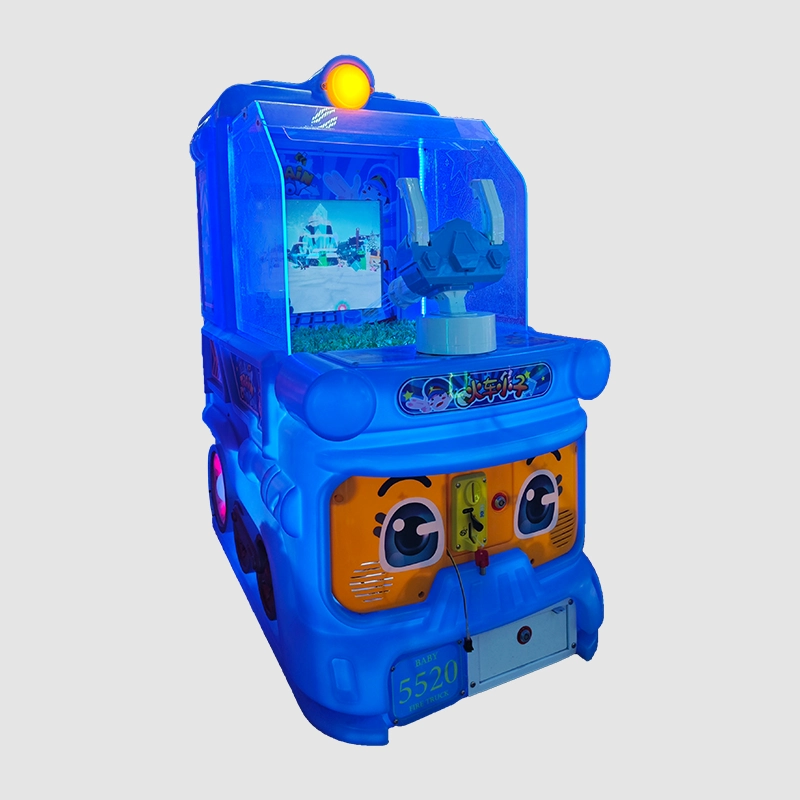
Marwey Commercial Indoor Coin Operated Children's Single Player Shooting Water Arcade Game Machine for Sale
The MARWEY Commercial Indoor Coin Operated Children’s Single Player Shooting Water Arcade Game Machine offers endless fun for kids. Perfect as a kids arcade game machine, this durable commercial arcade game machine delivers engaging play and easy operation for any arcade.
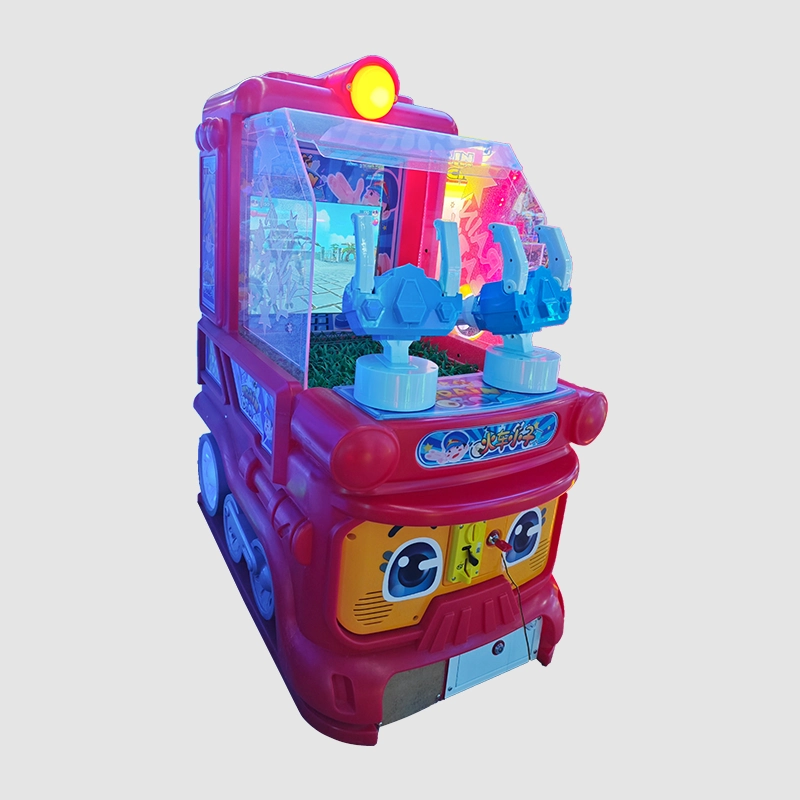
Marwey Commercial Indoor Coin Operated Cartoon HD Screen 2 Players Shooting Water Game Machine for Sale
The MARWEY Commercial Indoor Coin Operated Cartoon HD Screen 2 Players Shooting Water Game Machine delivers exciting arcade shooting game fun. Perfect for entertainment venues, this shooting arcade game machine features vibrant HD visuals and two-player action for endless amusement.
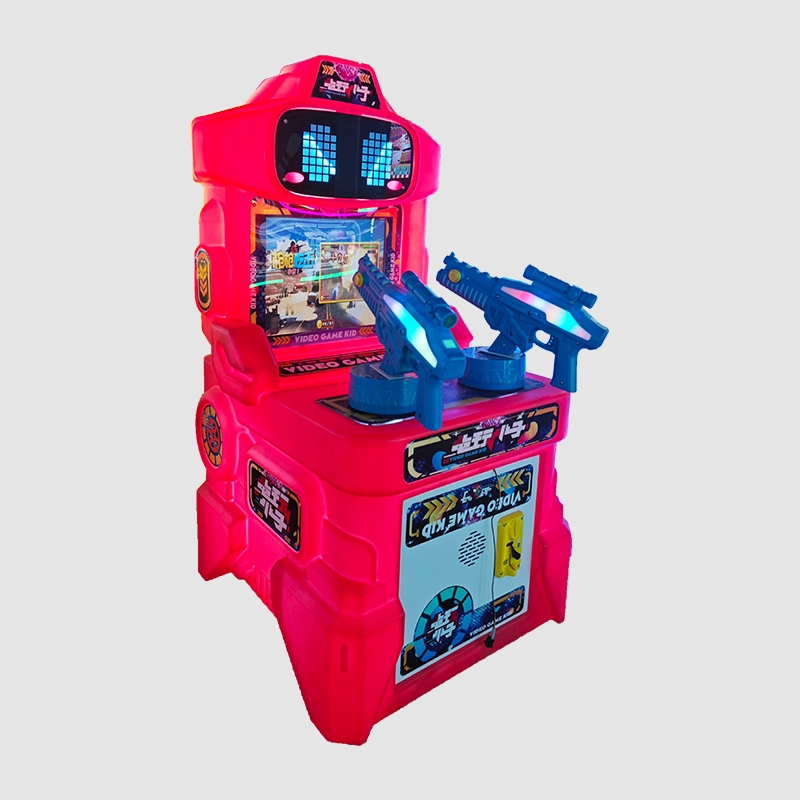
Marwey Wholesale Commercial Double Guns Shooting Arcade Machine HD Screen Coin Operated Game Machine
Experience thrill with the MARWEY Wholesale Commercial Double Guns Shooting Arcade Machine. Featuring an HD screen and coin-operated design, this gun arcade machine delivers immersive shooting arcade game fun. Durable, high-quality, perfect for entertainment venues.
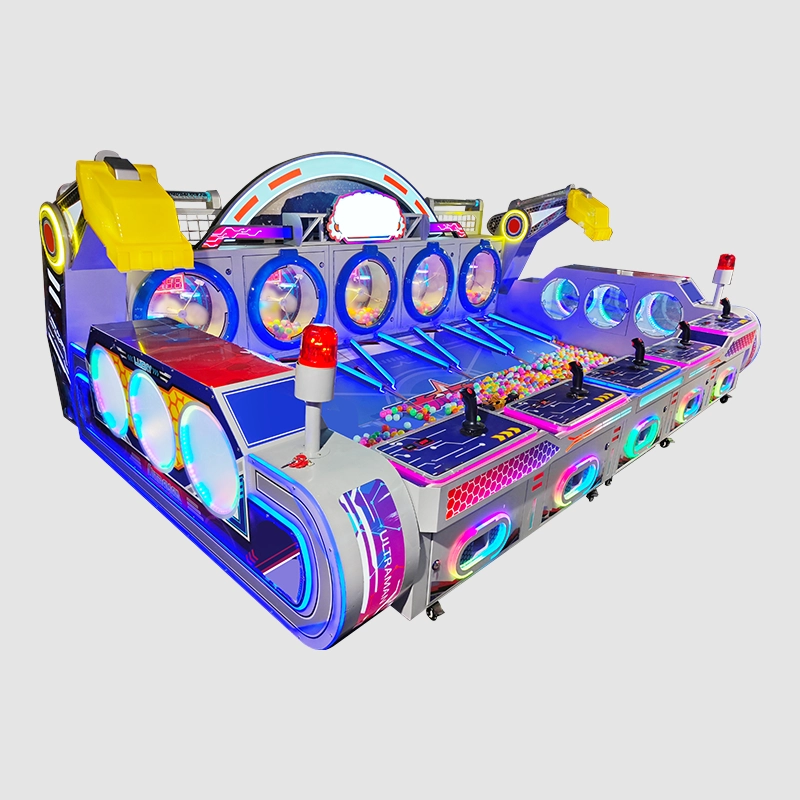
Marwey Supplier Indoor 5 Players Bulldozer Ball Pushing Game Commercial Excavator Digging Ball Machine
The MARWEY Supplier Indoor 5 Players Bulldozer Ball Pushing Game features a commercial excavator digging ball machine designed for fun and competitive play. This durable ball pushing game equipment ensures hours of entertainment, boosting teamwork and coordination in any indoor space.
Founded in 2012. MARWEY is one of the top Chinese companies when it comes to providing new and modern equipment and complete solutions for arcades, digital sports venues, and theme parks. We have all the expertise you could need in the industry, and we deliver projects from design to operation in over 100 countries.
Contact us

info@marwey.com

+86 189 2218 4260

Room 202, 2nd Floor, 1st Staircase, Building E, Hengran Creative Park, Guangzhou, China.
© 2024 MARWEY. All Rights Reserved.
MarweyArcade
Whatsapp: +8613512765586
MarweyArcade
marwey_arcade
arcademarwey
Marwey Amusement